
Capture time: ~2 minutes
Vehicle: 2020 Subaru Outback 2.5
Capture device: iPhone 12 mini
Workflow: 6 organized passes (3 front + 3 rear)
Not Every Inspection Starts with a Problem
This 2020 Subaru Outback has relatively low mileage, is driven as a normal daily vehicle, and has given its owner no reason to crawl underneath. No unusual noises, no fluid leaks, no repair concerns - just several years of regular driving.
That is exactly what made this inspection interesting.
Most underbody inspections begin after something goes wrong. We wanted to do the opposite: document how a modern vehicle naturally ages underneath while everything still appears perfectly healthy.
For this inspection we used the Raccoon Machines Inspection Kit together with an iPhone 12 mini.
Interestingly, this inspection evaluated two products introduced in 2020 - the Subaru underneath and the phone capturing it. Six years later, neither feels obsolete for this job. While the iPhone 12 mini is no longer a flagship camera, it still provides more than enough image quality for practical underbody inspections when paired with the optimized capture settings built into the Raccoon Machines app.
The inspection was performed at dusk, relying primarily on the phone's built-in LED flashlight rather than daylight. These are realistic conditions for an inspection after work or in your own driveway, making the results representative of how many owners would actually use the system.
The complete capture required approximately 2 minutes using our standard passenger-car workflow:
3 front passes
3 rear passes
After recording, the inspection was processed with SpeedReview™, which automatically detected each inspection pass, removed the repositioning footage, reconstructed the inspection, and organized everything into a clean review workflow.
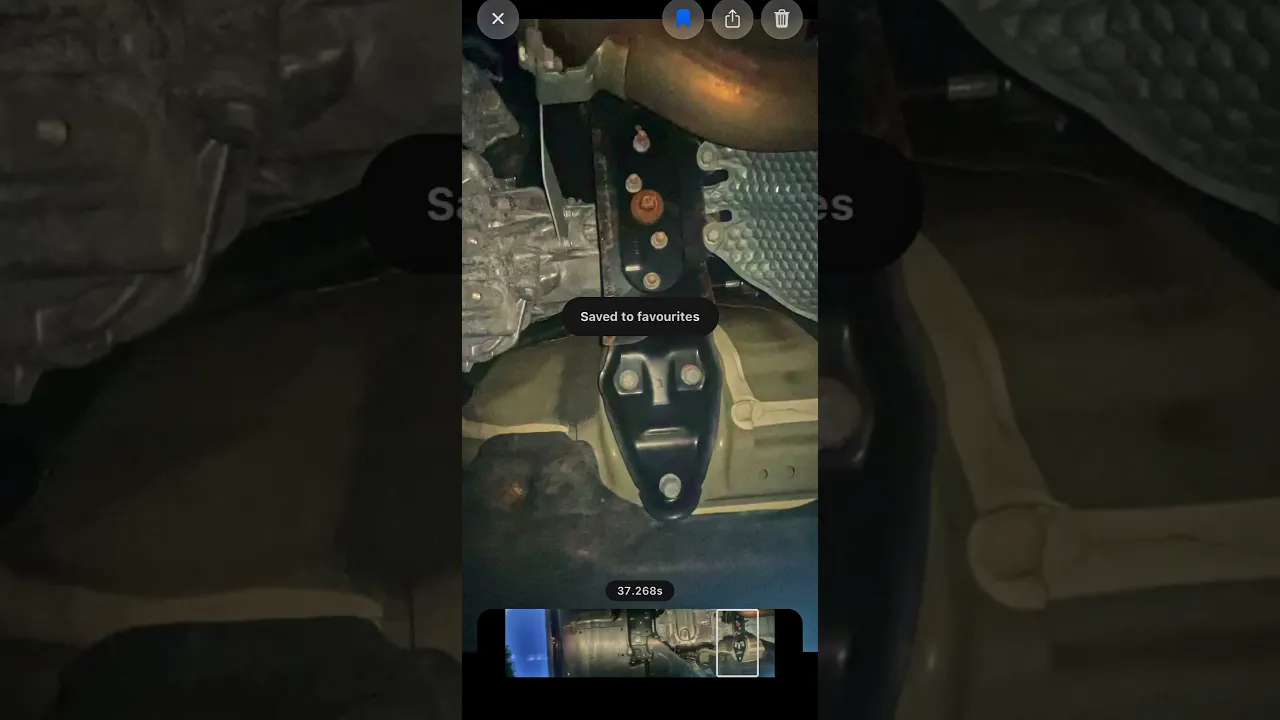
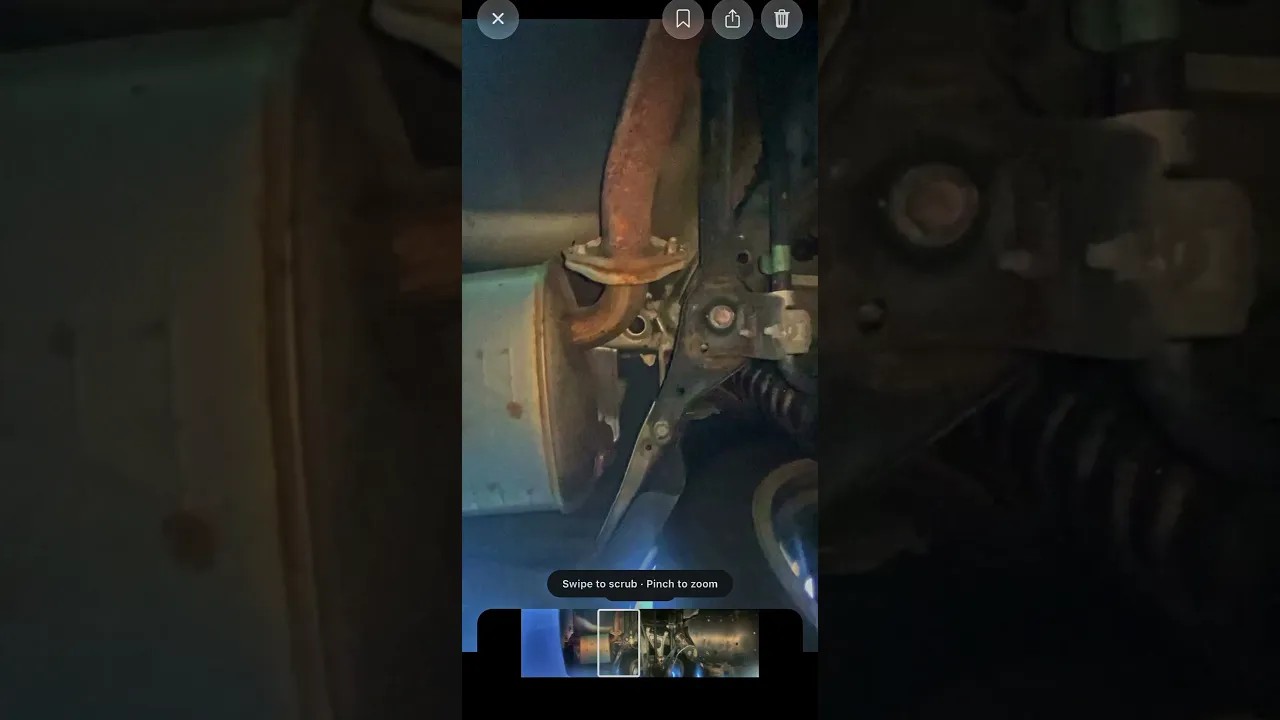
The reconstructed inspection is shown below.
Front Inspection
Rear Inspection
What We Noticed
Unlike many inspection reports, this one isn't about finding defects.
It's simply an opportunity to observe how a modern vehicle ages underneath after six years of ordinary use.
Overall, the first impression is extremely positive.
The floor pan remains exceptionally clean, protective panels are in excellent condition, and the underside still feels remarkably well preserved. It's immediately obvious that Subaru invested significant effort into protecting the vehicle's structure from the environment.
Then something interesting happens.
The closer you look, the more your attention shifts away from the major components and toward the smallest ones.
Instead of the body, suspension, or drivetrain, you begin noticing individual bolts, brackets, and fasteners.
The examples below summarize the observations that stood out during the inspection.
Small Details That Raise Interesting Questions
If the body can remain this well protected after six years, why should a handful of permanent bolts, fasteners, and structural components be the first things to make the underside look old?
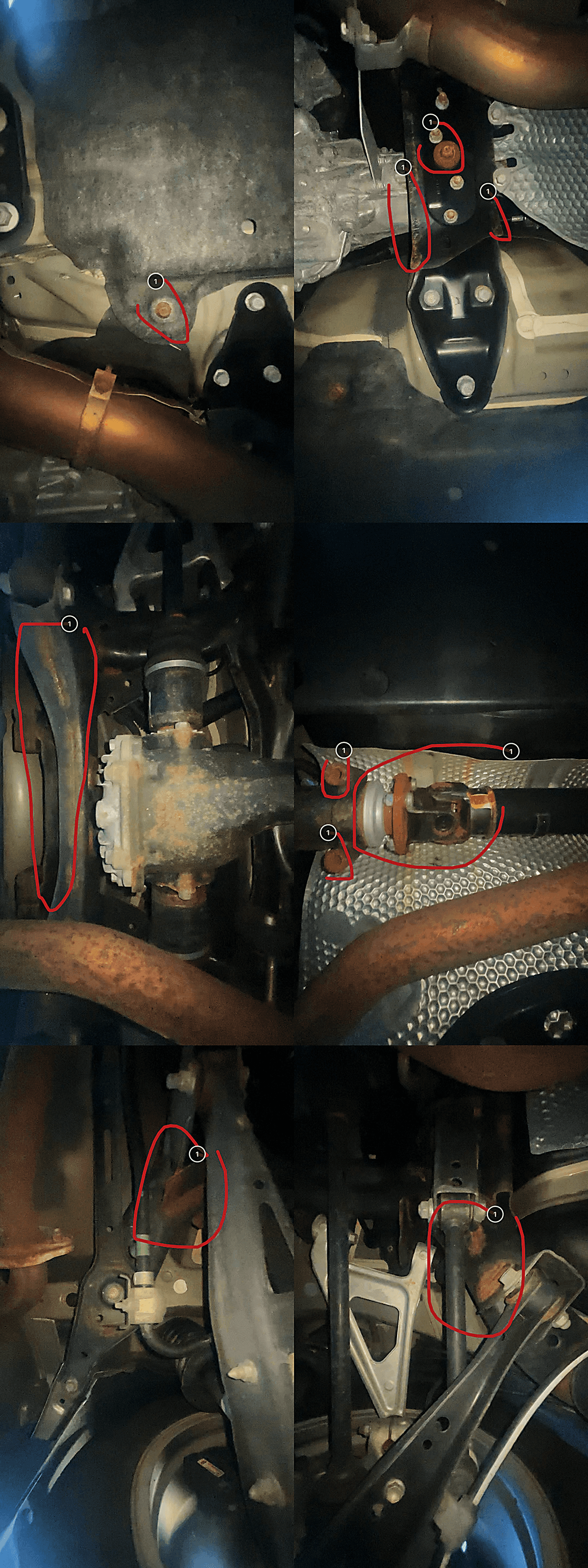
The exhaust system shows the expected amount of surface corrosion.
That isn't surprising.
Exhaust components experience extreme heat cycles, moisture, condensation, and road salt throughout their lives. They're consumable components designed with a finite service life, so some corrosion here is entirely expected.
The same logic largely applies to suspension arms.
Bushings, ball joints, stabilizer links, and complete control arms are maintenance items. Cosmetic corrosion on these components isn't particularly interesting because many of them will eventually be replaced anyway.
The more interesting observations involve hardware that is likely to remain on the vehicle for its entire life.
Several permanent bolts, screws, and shield fasteners already show noticeable corrosion despite neighboring components remaining in excellent condition.
One transmission mounting bolt immediately catches the eye. A few nearby fasteners tell a similar story.
None of these observations indicate a mechanical problem.
They're minor cosmetic imperfections with essentially no impact on reliability.
Yet they raise an interesting engineering question.
If Subaru clearly invested so much effort into protecting the body structure - and the results demonstrate that they did - why do a handful of inexpensive permanent fasteners become some of the first components to visually age?
Would improved coatings, better galvanization, or stainless hardware in selected locations have preserved that factory-fresh appearance for many more years?
The rear subframe raises another similar question.
Anyone living in regions where road salt is used knows the pattern. Small stone chips eventually expose bare metal. Corrosion begins around those damaged areas. Structural integrity may remain perfectly acceptable for many years, yet visually the component starts looking much older than the rest of the vehicle.
Considering how well the Outback's body has survived, it's natural to wonder whether the rear subframe itself could have received corrosion protection closer to the standard applied to the body.
This isn't criticism of Subaru.
Quite the opposite.
This inspection left us genuinely impressed with the vehicle's overall corrosion protection and underbody engineering. The discussion simply highlights the small compromises every manufacturer must make between cost, manufacturing complexity, serviceability, long-term durability, and appearance.
For owners who enjoy preserving their vehicles, inspections like this also suggest an interesting maintenance philosophy.
Consumable components such as exhaust systems and suspension arms will eventually be replaced regardless.
Permanent hardware is different.
Replacing exposed non-critical fasteners with more corrosion-resistant alternatives, protecting subframes before corrosion spreads, and treating exposed steel components early may significantly reduce the visual aging of the underside throughout the vehicle's lifetime.
Will it make the vehicle substantially more reliable?
Probably not.
Will it help preserve that clean, well-built appearance ten years from now?
Quite possibly.
Final Thoughts
Perhaps that's the most interesting outcome of this inspection.
We weren't searching for problems.
We weren't diagnosing a fault.
We simply documented how a well-maintained, everyday Subaru has aged underneath after six years of normal use.
The result is reassuring.
The vehicle remains exceptionally well protected, the overall engineering leaves a very positive impression, and the few areas that caught our attention are less about reliability than about long-term corrosion resistance and appearance.
Sometimes the most valuable inspection isn't the one that finds a problem.
It's the one that confirms everything is aging exactly as it should.
Capture time: ~2 minutes
Vehicle: 2020 Subaru Outback 2.5
Capture device: iPhone 12 mini
Workflow: 6 organized passes (3 front + 3 rear)
Not Every Inspection Starts with a Problem
This 2020 Subaru Outback has relatively low mileage, is driven as a normal daily vehicle, and has given its owner no reason to crawl underneath. No unusual noises, no fluid leaks, no repair concerns - just several years of regular driving.
That is exactly what made this inspection interesting.
Most underbody inspections begin after something goes wrong. We wanted to do the opposite: document how a modern vehicle naturally ages underneath while everything still appears perfectly healthy.
For this inspection we used the Raccoon Machines Inspection Kit together with an iPhone 12 mini.
Interestingly, this inspection evaluated two products introduced in 2020 - the Subaru underneath and the phone capturing it. Six years later, neither feels obsolete for this job. While the iPhone 12 mini is no longer a flagship camera, it still provides more than enough image quality for practical underbody inspections when paired with the optimized capture settings built into the Raccoon Machines app.
The inspection was performed at dusk, relying primarily on the phone's built-in LED flashlight rather than daylight. These are realistic conditions for an inspection after work or in your own driveway, making the results representative of how many owners would actually use the system.
The complete capture required approximately 2 minutes using our standard passenger-car workflow:
3 front passes
3 rear passes
After recording, the inspection was processed with SpeedReview™, which automatically detected each inspection pass, removed the repositioning footage, reconstructed the inspection, and organized everything into a clean review workflow.
The reconstructed inspection is shown below.
Front Inspection
Rear Inspection
What We Noticed
Unlike many inspection reports, this one isn't about finding defects.
It's simply an opportunity to observe how a modern vehicle ages underneath after six years of ordinary use.
Overall, the first impression is extremely positive.
The floor pan remains exceptionally clean, protective panels are in excellent condition, and the underside still feels remarkably well preserved. It's immediately obvious that Subaru invested significant effort into protecting the vehicle's structure from the environment.
Then something interesting happens.
The closer you look, the more your attention shifts away from the major components and toward the smallest ones.
Instead of the body, suspension, or drivetrain, you begin noticing individual bolts, brackets, and fasteners.
The examples below summarize the observations that stood out during the inspection.
Small Details That Raise Interesting Questions
If the body can remain this well protected after six years, why should a handful of permanent bolts, fasteners, and structural components be the first things to make the underside look old?
The exhaust system shows the expected amount of surface corrosion.
That isn't surprising.
Exhaust components experience extreme heat cycles, moisture, condensation, and road salt throughout their lives. They're consumable components designed with a finite service life, so some corrosion here is entirely expected.
The same logic largely applies to suspension arms.
Bushings, ball joints, stabilizer links, and complete control arms are maintenance items. Cosmetic corrosion on these components isn't particularly interesting because many of them will eventually be replaced anyway.
The more interesting observations involve hardware that is likely to remain on the vehicle for its entire life.
Several permanent bolts, screws, and shield fasteners already show noticeable corrosion despite neighboring components remaining in excellent condition.
One transmission mounting bolt immediately catches the eye. A few nearby fasteners tell a similar story.
None of these observations indicate a mechanical problem.
They're minor cosmetic imperfections with essentially no impact on reliability.
Yet they raise an interesting engineering question.
If Subaru clearly invested so much effort into protecting the body structure - and the results demonstrate that they did - why do a handful of inexpensive permanent fasteners become some of the first components to visually age?
Would improved coatings, better galvanization, or stainless hardware in selected locations have preserved that factory-fresh appearance for many more years?
The rear subframe raises another similar question.
Anyone living in regions where road salt is used knows the pattern. Small stone chips eventually expose bare metal. Corrosion begins around those damaged areas. Structural integrity may remain perfectly acceptable for many years, yet visually the component starts looking much older than the rest of the vehicle.
Considering how well the Outback's body has survived, it's natural to wonder whether the rear subframe itself could have received corrosion protection closer to the standard applied to the body.
This isn't criticism of Subaru.
Quite the opposite.
This inspection left us genuinely impressed with the vehicle's overall corrosion protection and underbody engineering. The discussion simply highlights the small compromises every manufacturer must make between cost, manufacturing complexity, serviceability, long-term durability, and appearance.
For owners who enjoy preserving their vehicles, inspections like this also suggest an interesting maintenance philosophy.
Consumable components such as exhaust systems and suspension arms will eventually be replaced regardless.
Permanent hardware is different.
Replacing exposed non-critical fasteners with more corrosion-resistant alternatives, protecting subframes before corrosion spreads, and treating exposed steel components early may significantly reduce the visual aging of the underside throughout the vehicle's lifetime.
Will it make the vehicle substantially more reliable?
Probably not.
Will it help preserve that clean, well-built appearance ten years from now?
Quite possibly.
Final Thoughts
Perhaps that's the most interesting outcome of this inspection.
We weren't searching for problems.
We weren't diagnosing a fault.
We simply documented how a well-maintained, everyday Subaru has aged underneath after six years of normal use.
The result is reassuring.
The vehicle remains exceptionally well protected, the overall engineering leaves a very positive impression, and the few areas that caught our attention are less about reliability than about long-term corrosion resistance and appearance.
Sometimes the most valuable inspection isn't the one that finds a problem.
It's the one that confirms everything is aging exactly as it should.
Our inspection kits and mobile app help you capture, reconstruct, and share underbody inspections in minutes.
Our inspection kits and mobile app help you capture, reconstruct, and share underbody inspections in minutes.

