
Vehicle: 1962 Chevrolet Impala SS Sport Coupe
Engine: 327 CI V8
Color: Anniversary Gold Metallic
Condition: Comprehensive concours restoration
Inspection: Detailed underbody capture
Some Cars Deserve to Be Seen From Underneath
Walking through a classic car event, most of the attention naturally goes to what you can see: paint, chrome, interiors, engine bays, wheels, trim, and all the small details that separate an ordinary old car from a carefully restored one. Then we came across this 1962 Chevrolet Impala SS Sport Coupe — and the part that caught our attention was underneath it.
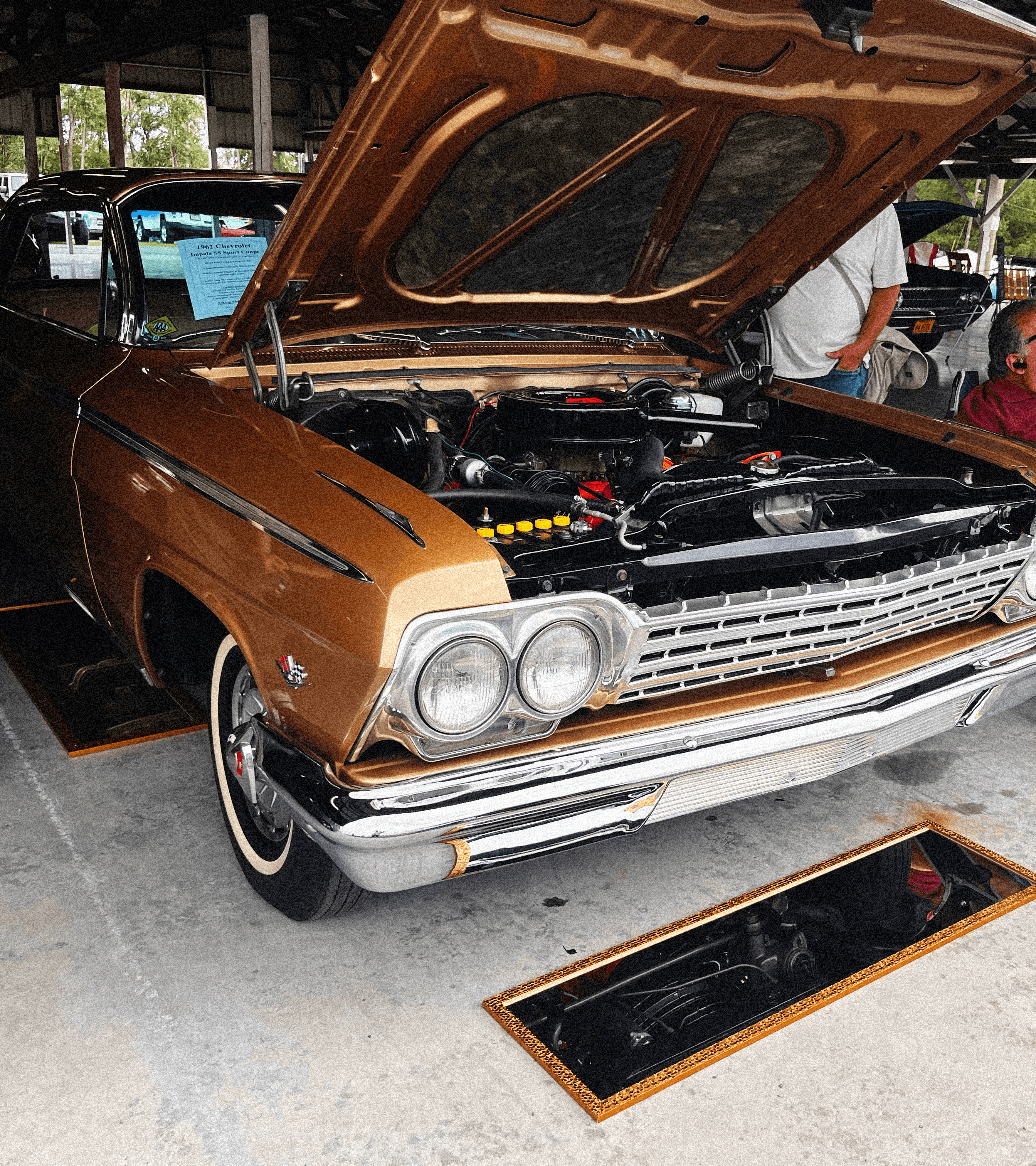
The Impala was beautifully restored from every angle, but the owner had placed mirrors on the floor underneath the car so visitors could see the chassis and floors. That tells you something about the level of restoration. Most cars have parts underneath that their owners would rather you didn't look at too closely. This one was being deliberately displayed.
Naturally, we had the Raccoon Machines Underbody Inspection Kit with us, so we took the opportunity to capture the undercarriage properly.
A 1962 Impala SS Restored Above and Below
According to the information displayed with the car, this is a 1962 Chevrolet Impala SS Sport Coupe finished in the correct code 927 Anniversary Gold Metallic, with a code 891 Yellow/Gold vinyl interior. The car was presented as a rust-free California car that received a comprehensive concours restoration.
Under the hood is a correct SA-suffix 327 cubic-inch V8, paired with a Powerglide transmission. The car also features factory air conditioning, power steering and brakes, power windows, bucket seats, and a console.
But one detail was particularly interesting from an underbody inspection perspective: powder-coated chassis and detailed floors painted in body color.
This wasn't simply a beautiful body sitting on an old undercarriage. Attention had been paid to the parts of the car that normally remain hidden.
From Mirrors to an Underbody Inspection
The mirrors were a great way to display that work. Anyone walking past could look down and catch a glimpse of the restored chassis without touching or lifting the Impala. We had another option.
Using the Raccoon Machines app and Inspection Kit, we made multiple passes from different positions, taking the opportunity to document as much of the restored undercarriage as possible. This wasn't a situation where we were trying to complete the inspection in the fewest possible passes. When you get an opportunity to look underneath a restored 1962 Impala SS in this condition, there's no reason to rush.

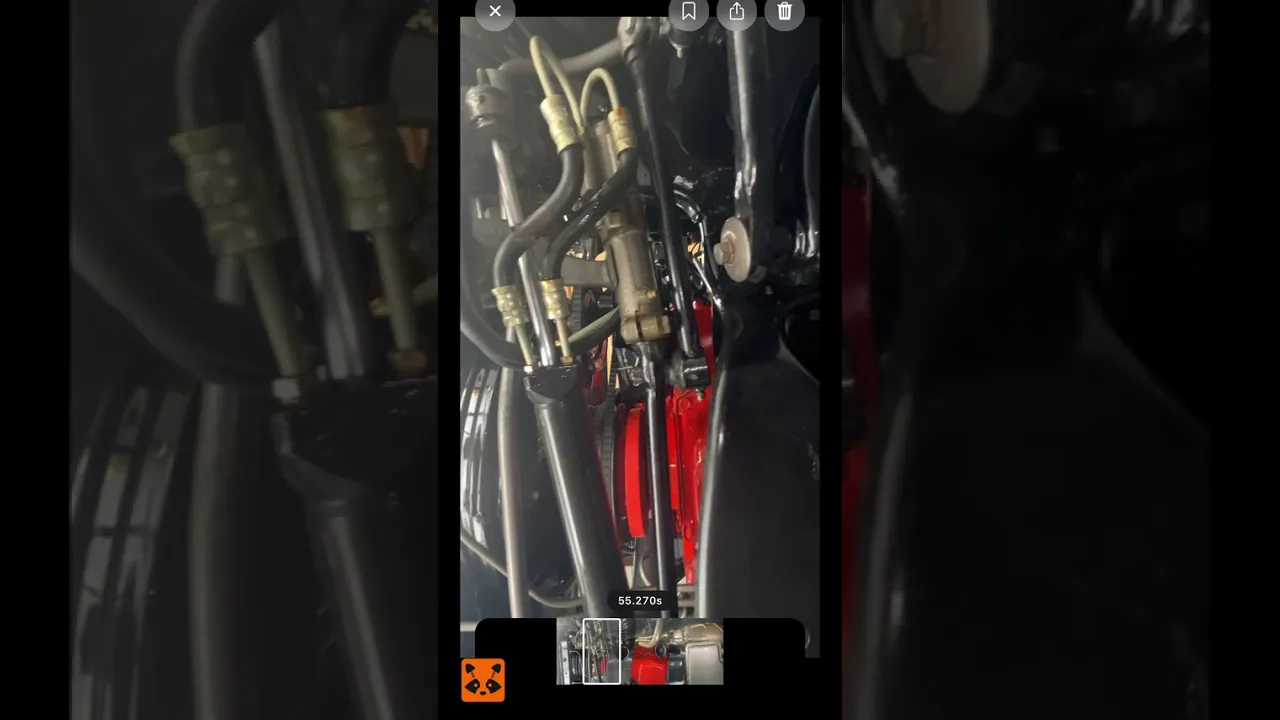
We wanted to see the floors, chassis, suspension, exhaust, drivetrain, mounting points, hardware, and all the little details that normally disappear underneath the car. The Short above shows a small sample from that inspection.
Classic Car Inspection Isn't Always About Finding Problems
Most underbody inspections begin with a question: what's wrong underneath?
Rust, corrosion, oil leaks, coolant leaks, damaged suspension components, previous collision repairs, deteriorated bushings, missing hardware, or questionable repair work are all things worth looking for when inspecting a used vehicle.
With a restored or collectible car, the question can be different: does the condition underneath match the condition everyone can see?
A beautiful exterior doesn't necessarily tell you how thoroughly a vehicle was restored. The chassis does. The floors do. So do the suspension, exhaust, mounting points, fasteners, coatings, and evidence of previous repairs.
On a collector vehicle, those hidden areas can be just as interesting as the paint and chrome.
The Undercarriage Is Part of a Collector Car's Condition
Collector cars are photographed constantly: exterior, interior, engine bay, trunk, wheels, trim, VIN tags, documentation. Yet one of the largest areas of the vehicle — the entire underside — is often represented by a few awkward photographs, if it's documented at all.
For a restored classic, that can leave out a significant part of the story. An underbody capture can create a visual record of the floors, chassis, suspension, drivetrain, exhaust, rocker areas, mounting points, and other components while the vehicle remains sitting normally on the ground.
That can be useful when buying or selling a collector car, evaluating a restoration, documenting a private collection, preparing a vehicle for an auction, recording its condition before transportation, or simply preserving a record for the owner. And unlike a mirror at a car show, that inspection can be reviewed again later.
A Different Kind of Inspection
This is one of the reasons we like collecting inspections from very different vehicles. A daily driver might reveal a torn CV boot. An older Northeast car might show corrosion. A recently repaired vehicle might need to be checked for fresh leaks. And a concours-restored classic might have absolutely nothing wrong underneath.
The tool doesn't really care what kind of vehicle is above it. The purpose is simply to make the normally hidden part of the car easier to see.
For classics and collector cars, sometimes that means finding a problem. Sometimes it means verifying the quality of a restoration. And sometimes it's simply about documenting something worth seeing.
Especially Useful When the Car Is Low
Many of the cars that are most interesting to inspect are also some of the hardest to see underneath. Classic coupes, sports cars, restomods, and lowered vehicles may leave very little room between the body and pavement.
A flashlight only gets you so far. A mirror gives you a limited angle. And getting your head underneath may simply not be possible. That's where a low-profile inspection tool becomes particularly useful: the camera goes where you can't.
The vehicle can remain on the ground, and there's no need to put a valuable collector car on a jack simply to get a basic visual look underneath. At a car show, auction preview, seller's garage, driveway, or parking lot, that can turn something normally difficult to inspect into a few simple passes.
When There's Nothing Bad to Find
There was no dramatic discovery underneath this Impala — and that's exactly why we wanted it in our inspection collection.
This 1962 Chevrolet Impala SS had been restored to a level where its owner intentionally placed mirrors underneath it because the chassis and floors deserved to be seen. We happened to walk by with another way to look. So, of course, we captured it.
Sometimes an underbody inspection answers “What's wrong with this car?”
And sometimes it answers a much nicer question: “Does it really look that good underneath?”
In this case, it did.
Our inspection kits and mobile app help you capture, review, and share underbody inspections — from everyday used cars to restored classics and collector vehicles.
Vehicle: 1962 Chevrolet Impala SS Sport Coupe
Engine: 327 CI V8
Color: Anniversary Gold Metallic
Condition: Comprehensive concours restoration
Inspection: Detailed underbody capture
Some Cars Deserve to Be Seen From Underneath
Walking through a classic car event, most of the attention naturally goes to what you can see: paint, chrome, interiors, engine bays, wheels, trim, and all the small details that separate an ordinary old car from a carefully restored one. Then we came across this 1962 Chevrolet Impala SS Sport Coupe — and the part that caught our attention was underneath it.
The Impala was beautifully restored from every angle, but the owner had placed mirrors on the floor underneath the car so visitors could see the chassis and floors. That tells you something about the level of restoration. Most cars have parts underneath that their owners would rather you didn't look at too closely. This one was being deliberately displayed.
Naturally, we had the Raccoon Machines Underbody Inspection Kit with us, so we took the opportunity to capture the undercarriage properly.
A 1962 Impala SS Restored Above and Below
According to the information displayed with the car, this is a 1962 Chevrolet Impala SS Sport Coupe finished in the correct code 927 Anniversary Gold Metallic, with a code 891 Yellow/Gold vinyl interior. The car was presented as a rust-free California car that received a comprehensive concours restoration.
Under the hood is a correct SA-suffix 327 cubic-inch V8, paired with a Powerglide transmission. The car also features factory air conditioning, power steering and brakes, power windows, bucket seats, and a console.
But one detail was particularly interesting from an underbody inspection perspective: powder-coated chassis and detailed floors painted in body color.
This wasn't simply a beautiful body sitting on an old undercarriage. Attention had been paid to the parts of the car that normally remain hidden.
From Mirrors to an Underbody Inspection
The mirrors were a great way to display that work. Anyone walking past could look down and catch a glimpse of the restored chassis without touching or lifting the Impala. We had another option.
Using the Raccoon Machines app and Inspection Kit, we made multiple passes from different positions, taking the opportunity to document as much of the restored undercarriage as possible. This wasn't a situation where we were trying to complete the inspection in the fewest possible passes. When you get an opportunity to look underneath a restored 1962 Impala SS in this condition, there's no reason to rush.
We wanted to see the floors, chassis, suspension, exhaust, drivetrain, mounting points, hardware, and all the little details that normally disappear underneath the car. The Short above shows a small sample from that inspection.
Classic Car Inspection Isn't Always About Finding Problems
Most underbody inspections begin with a question: what's wrong underneath?
Rust, corrosion, oil leaks, coolant leaks, damaged suspension components, previous collision repairs, deteriorated bushings, missing hardware, or questionable repair work are all things worth looking for when inspecting a used vehicle.
With a restored or collectible car, the question can be different: does the condition underneath match the condition everyone can see?
A beautiful exterior doesn't necessarily tell you how thoroughly a vehicle was restored. The chassis does. The floors do. So do the suspension, exhaust, mounting points, fasteners, coatings, and evidence of previous repairs.
On a collector vehicle, those hidden areas can be just as interesting as the paint and chrome.
The Undercarriage Is Part of a Collector Car's Condition
Collector cars are photographed constantly: exterior, interior, engine bay, trunk, wheels, trim, VIN tags, documentation. Yet one of the largest areas of the vehicle — the entire underside — is often represented by a few awkward photographs, if it's documented at all.
For a restored classic, that can leave out a significant part of the story. An underbody capture can create a visual record of the floors, chassis, suspension, drivetrain, exhaust, rocker areas, mounting points, and other components while the vehicle remains sitting normally on the ground.
That can be useful when buying or selling a collector car, evaluating a restoration, documenting a private collection, preparing a vehicle for an auction, recording its condition before transportation, or simply preserving a record for the owner. And unlike a mirror at a car show, that inspection can be reviewed again later.
A Different Kind of Inspection
This is one of the reasons we like collecting inspections from very different vehicles. A daily driver might reveal a torn CV boot. An older Northeast car might show corrosion. A recently repaired vehicle might need to be checked for fresh leaks. And a concours-restored classic might have absolutely nothing wrong underneath.
The tool doesn't really care what kind of vehicle is above it. The purpose is simply to make the normally hidden part of the car easier to see.
For classics and collector cars, sometimes that means finding a problem. Sometimes it means verifying the quality of a restoration. And sometimes it's simply about documenting something worth seeing.
Especially Useful When the Car Is Low
Many of the cars that are most interesting to inspect are also some of the hardest to see underneath. Classic coupes, sports cars, restomods, and lowered vehicles may leave very little room between the body and pavement.
A flashlight only gets you so far. A mirror gives you a limited angle. And getting your head underneath may simply not be possible. That's where a low-profile inspection tool becomes particularly useful: the camera goes where you can't.
The vehicle can remain on the ground, and there's no need to put a valuable collector car on a jack simply to get a basic visual look underneath. At a car show, auction preview, seller's garage, driveway, or parking lot, that can turn something normally difficult to inspect into a few simple passes.
When There's Nothing Bad to Find
There was no dramatic discovery underneath this Impala — and that's exactly why we wanted it in our inspection collection.
This 1962 Chevrolet Impala SS had been restored to a level where its owner intentionally placed mirrors underneath it because the chassis and floors deserved to be seen. We happened to walk by with another way to look. So, of course, we captured it.
Sometimes an underbody inspection answers “What's wrong with this car?”
And sometimes it answers a much nicer question: “Does it really look that good underneath?”
In this case, it did.
Our inspection kits and mobile app help you capture, review, and share underbody inspections — from everyday used cars to restored classics and collector vehicles.
Our inspection kits and mobile app help you capture, reconstruct, and share underbody inspections in minutes.
Our inspection kits and mobile app help you capture, reconstruct, and share underbody inspections in minutes.

